”
Written byKlara Robertson
Behind The Scenes Of “Lemons Lemons … Lemons” With Cast and Crew.
In the world of Sam Steiner’s “Lemons Lemons Lemons Lemons Lemons”, a law is passed that restricts people to 140 words a day. If one form of language gets taken away, how else do we communicate?
With the intent of observing the process behind the production, I attend a rehearsal for the upcoming play. We are surrounded by the weights and dumbbells of “The Fort” boxing ring on Bree Street. The cast have turned the gym into a makeshift rehearsal venue, using exercise equipment to mark the 2×2 meter space that the actors will perform in.
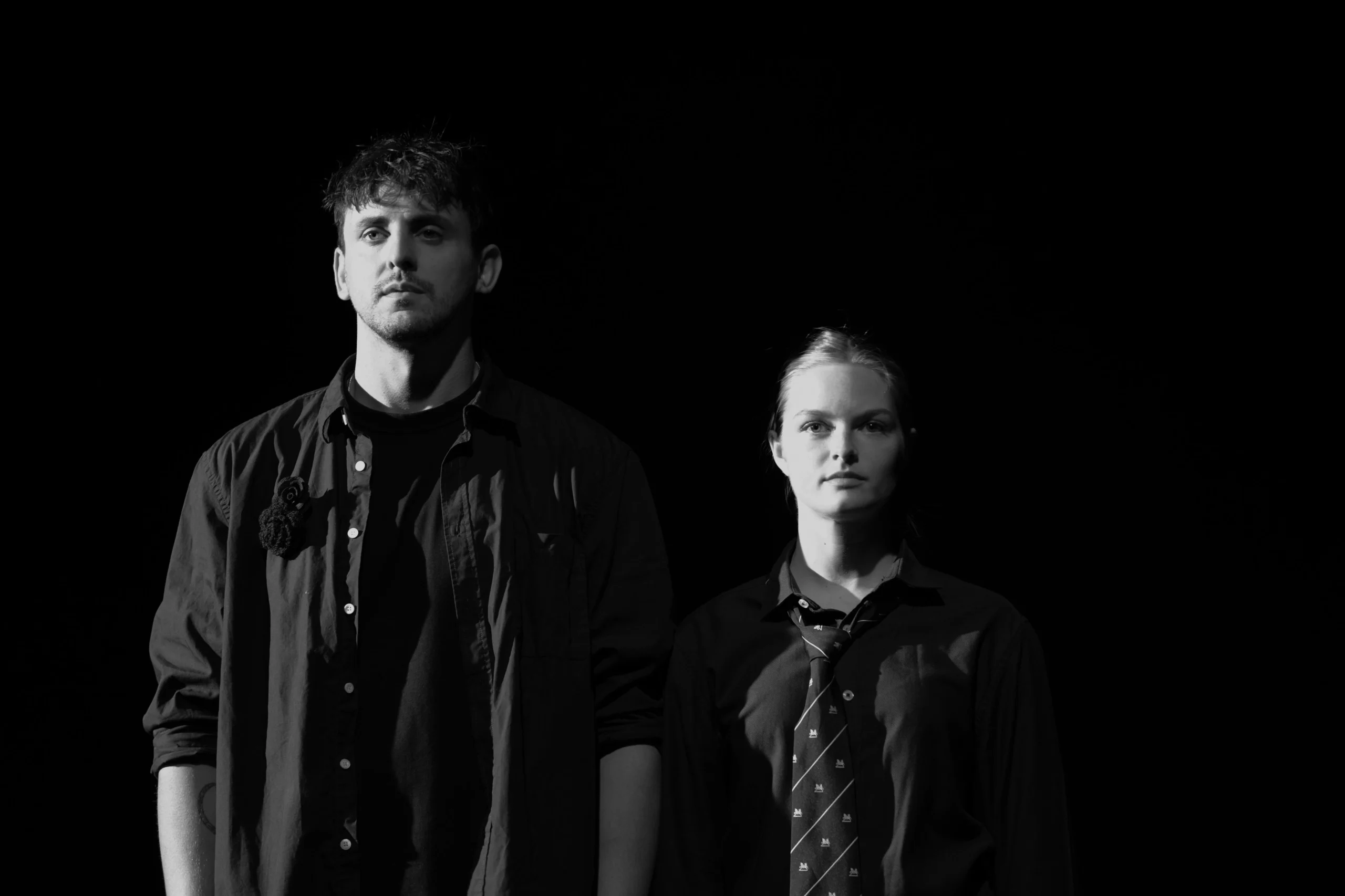
Jessie Diepeveen and Max Du Toit begin to warmup. The two actors face each other in silence. Jessie lightly touches Max’s arm. Max’s arm reacts to Jessie’s touch, moving away from her in a controlled lurch. Jessie continues commanding Max: he acts as a doll tied by strings, responding to Jessie’s movement. Director Henu Baden tells me that this game allows the actors to discover their proximity to each other.
Wordlessly reacting to each other’s touch lets the actors discover the intimacy required onstage, urging them to consider the relationship between physical space and language. “I really wanted to play with body language and spatial and touch language, focusing on the actors themselves”, says Baden. “I constantly had in mind how far away they are going to be from each other, how close. That was the starting point of my approach to the show. It all came down to what it’s going to look like structurally.”
With Baden and Du Toit respectively making their directorial and producorial debut, they chose the “Lemons” script with the intention of ‘text’ doing a lot of the heavy lifting. “We just approached it from the actors perspective, from the text perspective, then threw in some ‘Avant Gardeness’”, Baden explains. “Because the script is so good, we knew that if we stripped it back it would work to have the actors and text be the focus of the play”. The story is created through spatial dynamics of the actors, the intensity of direction creating intention and drive in the characters.
“Director Henu Baden tells me that this game allows the actors to discover their proximity to each other. Wordlessly reacting to each other’s touch lets the actors discover the intimacy required onstage, urging them to consider the relationship between physical space and language.”
The play is made up of short episodic scenes, making it incredibly complex and difficult to unpack. The actors navigate extremely quick scene changes and nonsequential time periods. Baden notes that if the scenes bleed into each other the play falls flat. He explains that the play is structured in beats and cuts. “We showed that with body positioning. Scene changes are done by a turn of the body.” Deciding when to use staccato movements, when to stand still, examining how the actor plants themselves to the floor, all speak to the unwritten intention and emotion of the characters.
Max du Toit adds that for the actor, the difficulty lies in this sharpness. “You are constantly jumping around pre and post important events in these people’s lives and in their relationship with each other. It’s really difficult going from one scene, with all its baggage, and stripping it down to the next in a millisecond”.
The rehearsal process shows the actors re-working and reviewing text, director and actor working together to uncover the subtext of the play. They trio work together to open up the dialogue, fighting repetition and avoiding getting stuck in speech patterns.
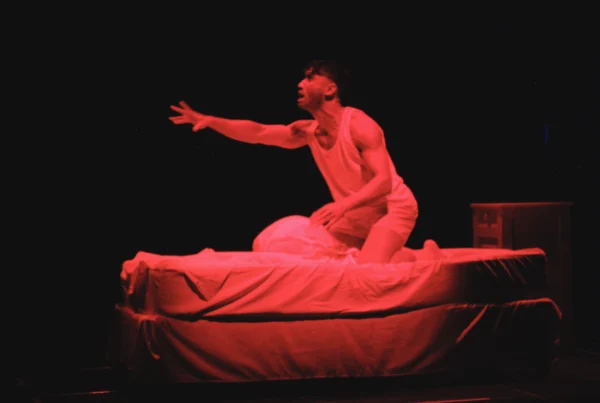
They run a scene and I watch as Max crouches, tapping the ground with definitive movements. Jessie bends, trying to listen, trying to figure out his code. She gives a coy look and stands on her tip toes. “High Heels?”. Max gazes at her, so in love but withholding himself. They circle each other, maintaining eye contact. Then, a snap change. The actors face each other, knees bent. They are playing charades, frantically trying to guess the game. Success. They get the word, shout it and rejoice, embrace and kiss. The scene flips: “Morning” the actors say awkwardly to each other / “ You were talking in your sleep last night”/ “What did I say?” / “Something about, “ Hi”/ Hi?” /“I like coming home to you”.
The scene ends and the actors wait for Baden’s notes. He reminds the actors of the stakes in the scene: “Everyone is on edge. Let’s see what happens when you do the line differently? You guys need to be a bit more cool with each other, more flirty, but still with that nervous edge. They are flirting with each other, and it’s so personal, and only they know what’s happening. Where is the different inflection on words?”
Baden says that he wanted the audience to feel like we are spying on the characters’ relationship, like we are looking through a peephole, like we shouldn’t be seeing what’s happening behind closed doors between these characters. “It’s so jarring and real, it cuts you.”
I ask the actors what their process was when approaching the play, how they discovered the intimate relationship between the characters. Max explains how he attempted twice to say 140 words a day and not exceed that, following the same law that is enacted in the play. “I’m a boxing coach, and within the first 2 sessions I had used that. So I tried again and excepted myself from work, and it was still extremely difficult. I knew this was a task, not something you could flippantly do. So in the play, those moments of turmoil, struggle, is when you start to see people’s worsts and bests, highlight them when they are hiding them, or be bare emotionally and what that would look like without words in relation to the person.”
Jessie explains how she wanted to make this character really different from herself. The way she does this is through the physicality of her character, Bernadette, and a slightly different take on the South African accent. “The biggest challenge with body language, (which tells so much) is outlining different body languages across the timeline. So when they’re in a bad place in their relationship, how is their posture different? Because they have had lives throughout the play.”
The “Lemons” project began as a concept between friends. Baden and Diepeveen met during their time at the University of Cape Town’s ‘drama school’, and the two lived together in their final year. Jessie bought the play when she was in New York, and put it on Henu’s bedside table. They had been talking about doing a play together. A year later, they gave the script to Max to read. His response: “We should do this play”. Two months later, in December of 2025, they were opening at Toneelhuis.
“People say don’t work with your friends, but I was so relaxed…it was so easy doing it”, says Baden. “It’s cool to have friends to say ‘let’s do this’”
“The stresses of a show were there”, Max adds, “but knowing that I could fall back on these two made it better. Just homies doing stuff with homies”
I recently interviewed the director Francesco Nassimbeni, who noted the difficulties involved in the theatre scene. “Theatre-makers are practicing this artform in a cultural situation that doesn’t allow. That there is so much theatre available to us in Cape Town is a testament to the generosity of the theatre-makers, who make work under conditions that anyone else would consider impossible, ludicrous”. This production of “Lemons” is indicative of Cape Town’s thriving subculture, a group of theatre-makers who are producing, curating, and innovating theatre; a created industry that is driven by a desire to create great work.