”
Written byEmily Spring
The subtle horror of Lake Mungo, told with ghouls and grief.
The first time I watched Lake Mungo was in a cramped, boiling bedroom at 12 A.M. I’d been on a family trip, and decided that the natural (and best) conclusion for a day of successful wandering would be to watch a horror movie.
Despite being released in 2008, the film has recently been making rounds again, putting it on my radar. Its manipulation of digital media and technology as storytelling features has consistently been hailed as masterful, and I was intrigued.
When I settled in to watch, I didn’t think Lake Mungo would scare me, hence my extremely regrettable decision to watch it in the dead of night. Going in with nothing but the synopsis to guide me, you can imagine my surprise when Lake Mungo was not only brilliantly written, but also one of the most terrifying films I’ve ever had the pleasure of seeing.
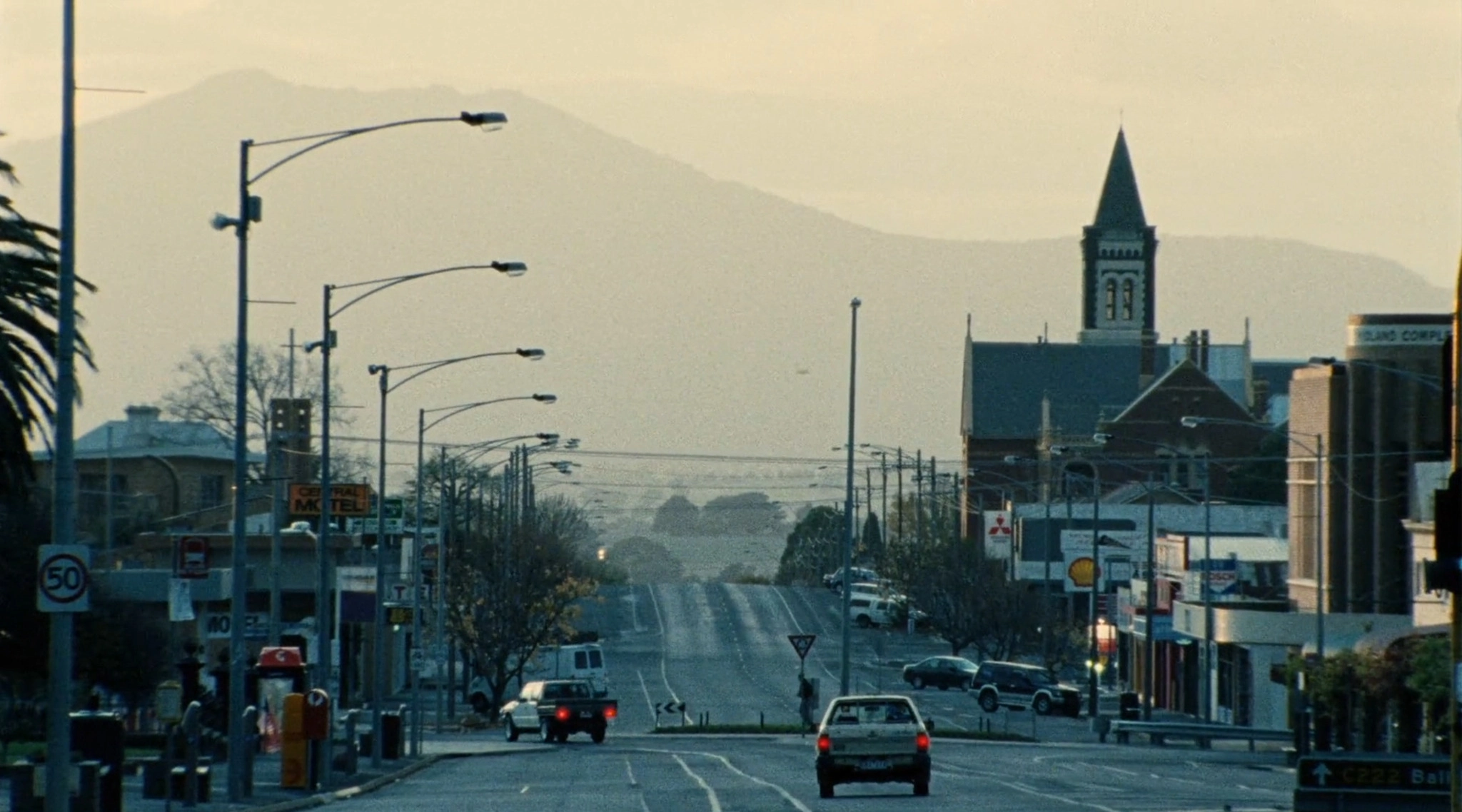
Lake Mungo, director Joel Anderson’s only film, is an Australian horror production told in a blended found-footage and mockumentary style, following the Palmer family after 16-year-old Alice Palmer’s demise.

There is a standard formula of ghost stories, wherein the vengeful dead come back to haunt those left behind. And as Alice starts to appear in photographs and videos postmortem, this is the track the film sets you upon. Familiar yet unoriginal, you initially lean into the comfort that comes with understanding the rules of the game – Alice is back, stalking her family from the grave – until the film turns it on its head, pushing you to wonder if Alice is even there. The encroaching dread stops coming from the concept of an evil supernatural and instead from how the film delves into the very real agony that comes with believing you are alone.
“As I stood there at the bed watching them, I was overcome with this intense sadness. I realised that there was nothing they could do for me anymore” – Alice Palmer, Lake Mungo (2008)
As the story progresses, you realise that Alice Palmer isn’t a vengeful spirit at all. She was a teenage girl, alone and afraid, who wanted more than anything to be seen, and who knew that she wouldn’t be. Beyond haunting the narrative, Alice is the narrative. Lake Mungo is her story at heart.
And yet everyone, including the viewer, pushes to control it, making it their own, instead, which is something that becomes undeniably clear in the mid-credits scenes. The fate of Alice Palmer is so visceral because it highlights a quintessential human fear – does anyone ever truly know you? And should they?
“Alice kept secrets. She kept the fact that she kept secrets a secret” – Kim Whittle, Lake Mungo (2008)
Toeing the line between reality and the supernatural, the film uses immense care and intelligence in its engagement with psychological horror, and its exploration of grief – both in how it impacts personal identity and how it impacts relationships – remains just as gut-wrenching as it was 17 years ago.
Watching Lake Mungo was definitely the best conclusion to my day of successful wandering. If you, too, are sitting in a cramped, boiling bedroom, settled in for an ill-timed horror movie watch, I hope this has advised you on the path to take.