”
Written byWritten by the CCC Team: Trethowan, Benjamin and Nyirenda
The Need For DIY Spaces Is Essential To The Future Of Cape Town’s Event Scene.
Let’s face it, Cape Town has a real estate problem. In that, everyone wants to live here, work here and be here, but there is not enough here for everyone. Added to the boom of neo-colonialism, the decline of accessible housing and the increasing rise of rent, being in Cape Town has never been more profitable for those with the means to profit from it. AirBNB, wealthy property developers, international currencies and the overbearing, dismissive attitude of foreign interest beyond the things they can personally enjoy – becomes the norm as Cape Town continually shines as a jewel in the eyes of international and local tourism.
But past the dramatic struggle of finding an affordable place to live while juggling upwards of three different jobs and creative pursuits, the city, despite its bustle, feels devoid of any meaningful music culture. Capitulated more towards the wants and wills of a richer foreign market, what is the mode is really what is expected of us to be popular. A lot of which is curated by those who are in the music and creative industries and is yet still dominated by increasingly white-washed corporate-level sponsors and slimy venue owners determining what is the standard or the status quo. So why are DIY Spaces so important? Well, any spark to light the fuse is more relevant now than ever.
Have you ever seen ‘Field of Dreams?’ Probably not. It’s an older American Sports based movie with little to no relevance for us in RSA other than the occasional times it was rerun on SABC 3 way back when. But in it, after debating the necessity of building a baseball stadium in the middle of Kentucky (or something or other) Kevin Costner hits the famous line “Build it and they will come’.
Well, our problem is that there isn’t anything being built that allows movement. What are our main live performance spaces for people to break out? District? Cafe Roux? Kirstenbosch? Cape Town Stadium? How are we meant to have a scene that reflects the diverse sound and talent inside our Peninsula if the majority of real estate focus is based primarily on residential and commercial properties. Subsequently, our scene is not nearly wide or competitive enough to sustain itself past a certain point of one-day parties and weekend festivals a couple of times a year. Due to the advent of elevated corporate interest within Cape Town which has increasingly bled into the events space, pushing the general mindset of those who facilitate and grow the space from people focused on allowing greater creative freedom and valuing the experience of the consumer, to a mindset that prioritises the acquisition of capital gains.
“What are our main live performance spaces for people to break out? District? Cafe Roux? Kirstenbosch? Cape Town Stadium? ”
That emphasis on profit leaves smaller organisers pushed to the wayside when booking and co-ordinating events in well-established venues in Cape Town, as the larger well known and recognized space holds all the leverage in any sort of account or venue negotiations. Smaller event organisers are easily taken advantage of due to the lack of brand recognition and experience. The culture of music events has entered a point of such overwhelming possibility that the lack of any action or effort to be realised causes us to enter a state of decay which is why it is so crucial to look for alternative venues to keep the space alive. New is different. Different is good.
This is evident in how event spaces such as Waiting Room, under new ownership, went from being the dingy dive club on Long Street that almost felt like the living, breathing heart of the city, to being transformed into just another Cape Town event space with bottle service and leather lounges. Did we say different is good? We mean, it can be good. And that’s the point.
The events scene in Cape Town is in a strange place at the moment. We’ve got a variety of young collectives bringing fresh soundscapes and inclusive party spaces to the industry, yet these groups have to contend with the financial firepower of commercial event companies that dominate the scene. Creatives trying to break into the industry are forced to either use limited established venues and, more often than not, be constrained by the owners’ relentless pursuit of profit – or try to seek alternative venue spaces that lack the capacity and infrastructure to best showcase their concepts. This feeds into a narrative that music events in Cape Town are lacklustre, repeating the same party and booking the same limited pool of already established DJ’s rather than putting together fresh lineups and truly platforming up-and-coming performers.
People are rightfully becoming frustrated with having to spend upwards of R200 to experience the same lazy curations, generic venue spaces and egotistical culture. The situation can easily feel quite hopeless to partygoers, event organisers, and young artists alike. However, there is a ray of solace in the uptick of smaller event groups hosting parties at DIY Venues, along with the much-needed comeback of the house party.
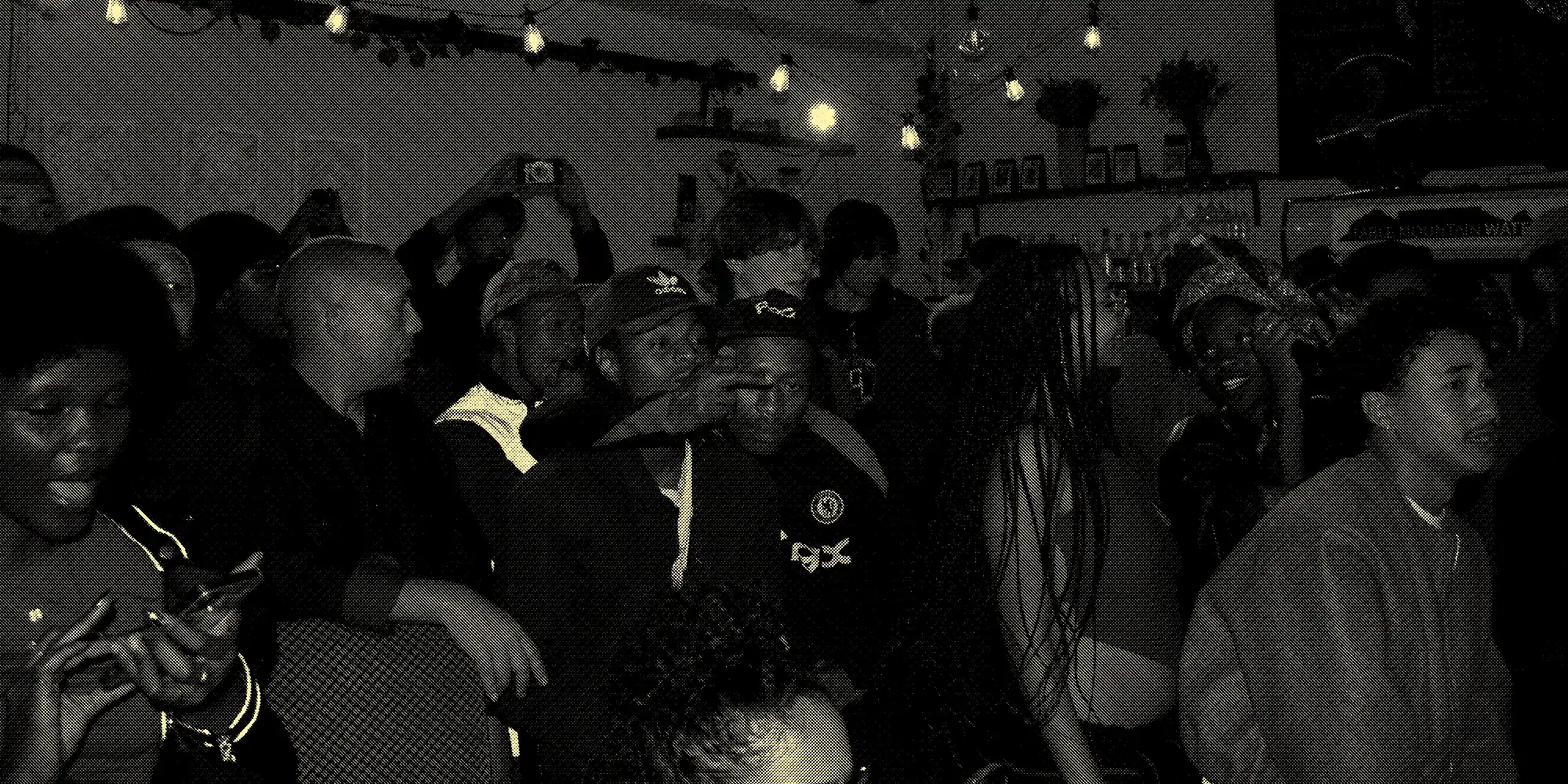
Back in 2019 Mouth2Mouth Collective, a group of friends united by their passion for music and aesthetics, hosted one of their first parties at a Camp Street house where multiple members of the group resided at the time. It was evident to those in attendance that this was not your average Cape Town music event – the acts all brought new, engaging sounds and the space had been beautifully decorated with greenery and a picturesque lighting setup emphasising the passion and care that had gone into this project in stark contrast to your typical mainstream club event. In the 7 following years, the collective have established themselves one of the most exciting groups in the local alternative electronic and live music scene. In the past few years, many younger organisers have followed suit in throwing parties at less conventional locations.
This has not by any means led to a full-on renaissance of DIY spaces in Cape Town, however there is a growing number of case studies reflecting these events occurring such as Meccamind’s house party in Observatory and some of the projects that have taken place at Nappy Studios.
“This is evident in how event spaces such as Waiting Room, under new ownership, went from being the dingy dive club on Long Street that almost felt like the living, breathing heart of the city, to being transformed into just another Cape Town event space with bottle service and leather lounges.”
But we need to see a rise of events in DIY spaces, not purely to have places to host but to place more bargaining power in the hands of smaller organisers to allow opportunities to grow and create something different within an increasingly turgid scene. It is inspiring that young event organisers and creatives are finding ways to operate outside the confines of the mainstream event venues, the restrictions that be and the barriers to entry that they come with. As heartening as this is to see, the reality is that these alternate spaces are not easily available and with certain groups focusing on and prioritizing Housing and Real Estate *AHEM AHEM THE DA AHEM AHEM* the crucible is on the creators to introduce new projects and ideas to invigorate a system that doesn’t pay out the way a lot of other aspects of the Tourism and Culture industries do.
The standard of what is good should not be determined by an international bar but rather what continues to make our own scene and culture truly thrive. A supportive economic culture and diverse platforms across the board, allowing for the creatives to actually make a living off their pursuits and subsequently for the public to enjoy these things in a way that is truly meaningful. In the words of Kevin Costner, “I danced with those wolves.”
Just Kidding, ‘Build It, and they WILL come”.