”
Written byNatalie Fraser
The Unwoven Warrior: A genre-bending debut by Jon Keevy
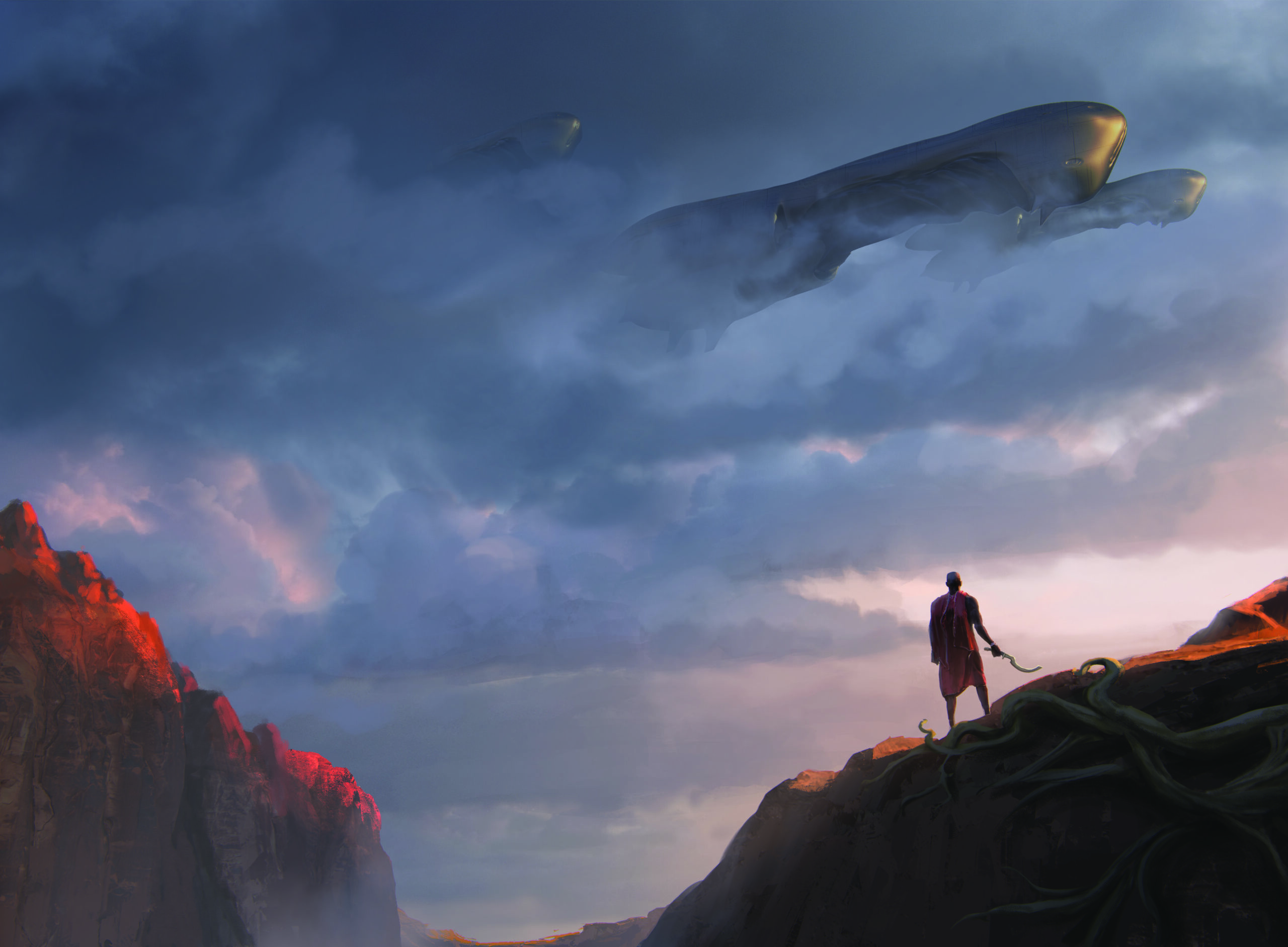
The Unwoven Warrior, by award-winning writer Jon Keevy, is the story of Amkela, a guerilla fighter and unintentional hero who finds himself flung to the helm of his people’s revolution against the colonial Empire. At a moment of desperation and grief, he meets dreaming-what-is-to-come, a “being of visions and vines” that promises the power, revenge and liberation that Amkela seeks. However, the being’s promise comes at a price that Amkela may not be able to pay.
In this debut, Keevy builds complex societies, languages, landscapes and lore in which his gripping storylines and vivid characters play. It is a true feat in world building and genre exploration. The story is character-driven while also being steered by a propulsive and unpredictable plot, placing Amkela’s internal grapplings with grief, growth and power against a backdrop of colonial tyranny and an asymmetricalwar, topics that are distressingly ever-relevant.
Keevy achieves a gripping and highly controlled narrative pace. He carefully balances detailed description with abstraction, which ensures the reader never feels spoon-fed. Scenes of rapid-action unfold in an unhurried and calculated way, as the author does not shy away from sitting in a moment or squeezing the most out of every scene. The result is a read that is both action-packed and had me holding my breath for what felt like pages at a time.
From chapter to chapter, the novel seamlessly bleeds through genres, evoking fantasy, sci-fi, bio-punk, suspense, and even some moments of horror. On the shelves, Unwoven Warrior has also been slotted into the categories of afro-futurism and afro-fantasy, genres which Keevy has approached with much consideration. He references the writing of Nigerian-American author, Nnedi Okorafor, who coined the terms Africanfuturism and Africanjujuism, which are not to be conflated with afro-futurism.
“He carefully balances detailed description with abstraction, which ensures the reader never feels spoon-fed.”
“Nnedi Okorafor has quite a substantial essay on what she calls Africanfuturism and Africanjujuism,” explains Keevy. “The basic takeaway is that Afrofuturism is often the American diaspora looking back and imagining Africa from outside of it, whereas, for her, Africanfuturism and Africanjujuism are imagining it from inside.”
“I feel like I occupy a space as both an insider and an outsider,” he goes on to say. “I’ve lived my whole life in South Africa but I’m also just a white guy who can’t speak a lick of any indigenous languages.”
As a result, thorough research was critical to Keevy’s process. This sparked broad anthropological research down a variety of avenues, including the many asymmetrical wars that have taken place in South Africa, specifically the Anglo-Xhosa wars, as well as African religions and mythologies.
“There is obviously ancestry worship in the book but I wanted to make it very distinct,” says Keevy. “I think the most respectful way I could approach indigenous living cultures and religions is to not duplicate it but to try and play in the same key. I wanted to make something unique and distinct because I don’t want to steal it.”
Keevy’s thorough research also extended to conversations with geologists, to ensure a rich landscape; trauma-surgeons, to ensure accuracy in fight scenes; and engineers, who assisted in the technological aspects of the world. He even came across a PDF scan of a 1950s Popular Mechanics article that offered an inside tour of the Hindenburg in his research of zeppelins, which appear as looming omens of the Empire throughout the novel.
“Collaboration in writing is the most important thing to me,” says Keevy. “That friction is exciting, it’s what brings new ideas and challenges things.”
This extensive research is palpable on every page of the book. No image or scene appears rushed or a half-baked afterthought and it is clear that Keevy is an absolute expert in the world he has created. Keevy has produced an exciting contribution to South African literature and the world of South African epic genre-bending fictions. I greatly look forward to the rest of Amkela’s story.
The Unwoven Warrior was published by the new local publishing house, Mirari Press. The company focuses on speculative fiction from South Africa and regularly calls for submissions to anthologies.
For more of our Visceral features, click here.